
Your passwords are not enough.
They never were.
We manage MFA so you don’t have to.
Assura deploys and manages Cisco Duo for your organization, protecting every application, every user, and every device with phishing-resistant multifactor authentication. Fully managed or co-managed, we handle the complexity so your team can stay focused.
Passwords fail. MFA stops the breach.
Over 80 percent of successful breaches involve stolen or weak credentials. A password alone is not a security control, it is an assumption that no one else has it. Multifactor authentication breaks that assumption. But deploying and managing MFA across every application, every user, and every device in your environment is not a one-afternoon project. Policy configuration, user enrollment, device trust, helpdesk support, and ongoing maintenance all require expertise most IT teams do not have to spare.
That is exactly what we do.
What we protect and how.
We deploy Duo across your environment and manage it on an ongoing basis, covering every access point from legacy applications to modern cloud services.

Every Application, Modern and Legacy
Duo works with what you already have. We integrate MFA across your VPN, Office 365, Google Workspace, AWS, PC and Mac, server access, Salesforce, and hundreds of other applications, including custom and legacy systems that other MFA solutions leave unprotected.
Every Authentication Method
Your users are not all the same. We configure the right mix of push notifications to iOS and Android, Universal 2nd Factor tokens, one-time passwords, and other methods so authentication is strong without being a barrier to getting work done.

Adaptive Access Policies
Not every login carries the same risk. We configure Duo’s conditional access policies to enforce stricter controls based on device health, user location, network, and application sensitivity, so your riskiest access points get your strongest protection.

User Enrollment and Ongoing Support
Getting users enrolled and keeping them enrolled is where most MFA deployments stall. We handle the full user lifecycle: enrollment, device changes, resets, and helpdesk support, at Tier 1 or Tier 2 depending on your service model.
Aligned to the frameworks you answer to:
Who we manage this for.
For the IT leader who owns access security.
MFA is on your list. It might have been on your list for a while. You know it needs to happen, you know it matters, and you also know that deploying it right, keeping policies current, and managing user support on top of everything else is more than your team has bandwidth for. We take ownership of the program so you can close the item and move on. If your auditor or cyber insurance carrier has flagged access controls as a finding, this is the fastest path to closing it.
For the security leader who needs it done right.
A misconfigured MFA deployment is worse than a talking point, it is a false sense of security. You need policies that reflect your actual risk posture, device trust that enforces what you intend, and reporting that proves the program is working. We bring the Duo expertise and the managed service wrapper so you get a program that holds up to scrutiny, not just a checked box.
MFA is where the zero trust journey begins.
Zero trust means no user and no device is trusted by default. Every access request must be verified. Duo covers all four zero trust functions: establishing user and device trust, enforcing trust-based access through adaptive policies, continuously verifying trust through risk-based authentication, and detecting and responding to changes in trust. Deploy Duo with Assura and you are not just checking the MFA box. You are building the identity and device trust foundation that NIST SP 800-207, the CISA Zero Trust Maturity Model, CMMC, and NIST SP 800-171 all require.
Why teams choose Assura for managed MFA.
We configure it for your environment, not the default.
Most MFA deployments ship with out-of-the-box policies that were not designed for your applications, your users, or your compliance requirements. We scope the deployment to your environment, configure adaptive policies that match your actual risk, and tune them as your environment changes.
Ongoing management, not a one-time install.
MFA is not a set-and-forget control. Users change devices. Applications get added. Policies need updating. We provide continuous management of your Duo environment so it stays current, correctly configured, and aligned with your security standards.
Flexible support models.
Some organizations want us to handle everything including Tier 1 end user calls. Others have a capable helpdesk and just need Tier 2 expertise and escalation support. We offer both via our Fully Managed and Co-Managed service models. You choose the model that fits your team.
Tested to the standard you answer to.
When we deploy and manage MFA to meet a regulatory or contractual requirement, we stand behind it. If your assessor or auditor finds that our work does not satisfy that requirement, we fix it at our expense, no matter the cost. That’s the AuditArmor® Guarantee.
Your authentication environment, always current.
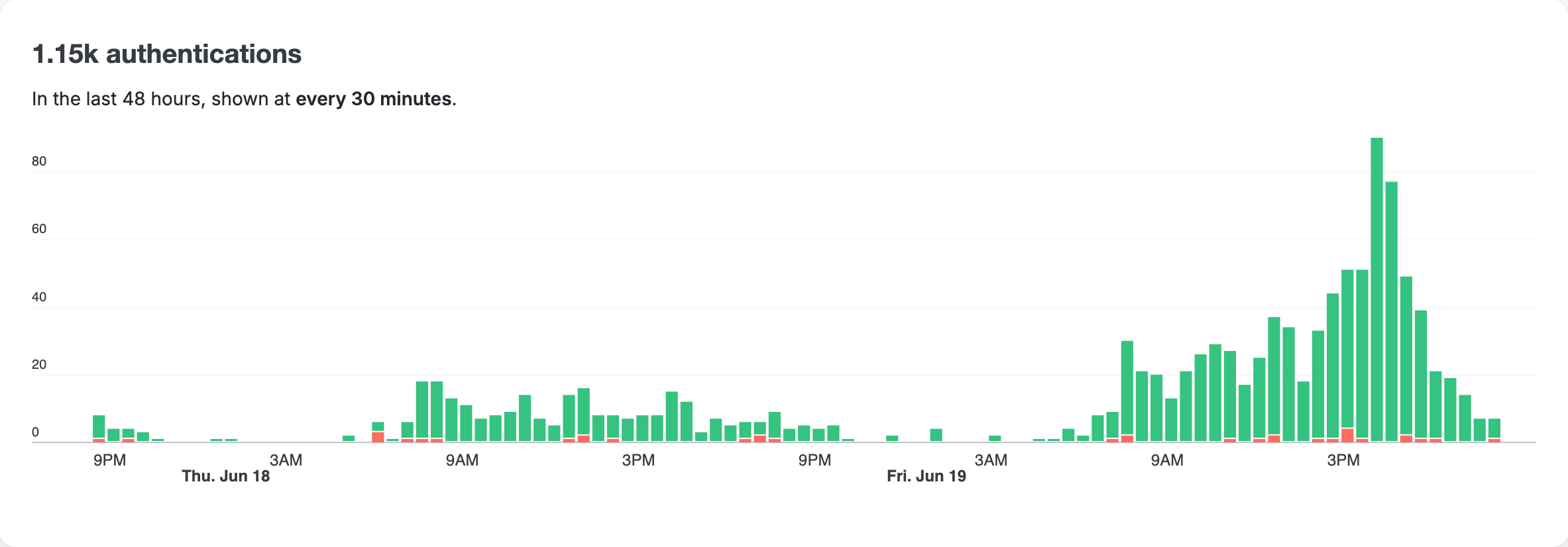
Duo’s admin console gives you full visibility into every authentication event, every device, and every policy across your environment. We manage the platform on your behalf, keeping policies tuned, users enrolled, and reporting current so you always know your MFA program is working. And if your organization runs our Managed SIEM/XDR service, Duo authentication logs feed directly into the Stellar Cyber platform, giving Assura’s SOC identity context on every alert.
Proven where it counts.
With Assura managing MFA for us, I have confidence that we’ve shut the door on a common way that attackers breach systems.
Director of IT for a Regional Airport
19
Years managing identity and access security
Thousands
Number of users protected across client environments
#94
Top 250 MSSP, 2025
Choose your service model.
Both models are built on Duo and include deployment, policy configuration, and ongoing management. The difference is how much of the day-to-day user support you want us to own.
Co-Managed MFA
Your helpdesk handles Tier 1
Your IT team manages routine user support including enrollment, device changes, and access troubleshooting. The right model if you have a capable helpdesk and want expert backup.
Fully Managed MFA
We handle everything
Assura owns the full support stack, Tier 1 through Tier 2, for both your end users and your IT team. We handle enrollment, device resets, troubleshooting, policy management, and escalation. The right model if you want MFA completely off your team’s plate.
Stop relying on passwords alone.
Let us deploy and manage Cisco Duo for your organization. We will scope the right service model, configure policies that match your environment, and own the ongoing management so your team does not have to.
Frequently Asked Questions
Why is MFA required by so many compliance frameworks?
Because stolen credentials are the single most common initial access vector in breaches, and a password alone provides no defense once it has been stolen. MFA breaks the credential theft attack chain by requiring a second factor that the attacker does not have, even when they have the password. Every major framework that touches access control has recognized this and built MFA into its requirements, whether explicitly as a named control or implicitly through access management and authentication standards.
The frameworks that require or strongly expect MFA include CMMC, CJIS, HIPAA/HITECH, FFIEC, NIST SP 800-53, NIST SP 800-171, PCI DSS, SOC 2, and IRS Publication 1075, among others. If you are under any of these, MFA is not optional, and a misconfigured or partially deployed MFA program is often treated as a finding in its own right.
What authentication methods does Duo support?
Duo supports a range of authentication methods, and we configure the right mix for your users and your risk posture. The methods available include Duo Push notifications to iOS and Android, Universal 2nd Factor (U2F) hardware tokens, Duo Time-based One-Time Password (TOTP) hardware tokens, one-time passwords (OTP) via authenticator apps, and biometric authentication via Touch ID, Face ID, and Windows Hello. We do not configure phone callback or SMS as authentication methods, as these are considered insufficiently secure under current NIST guidance and are deprecated for use in regulated environments.
The right mix depends on your user population, your devices, and your compliance requirements. We scope this during deployment so every user has a method that is both secure and practical for how they work.
What is the difference between the Fully Managed and Co-Managed service models?
Both models are built on Duo and include deployment, policy configuration, and ongoing management. The difference is how much of the day-to-day user support Assura owns.
In the Co-Managed model, your IT team handles Tier 1 user support: enrollment, device changes, access troubleshooting, and resets. Assura provides Tier 2 expertise and escalation support. The right choice if you have a capable helpdesk and want expert backup without handing off the user-facing work entirely.
In the Fully Managed model, Assura owns the full support stack from Tier 1 through Tier 2, for both your end users and your IT team. Enrollment, device resets, troubleshooting, policy management, and escalation all come to us. The right choice if you want MFA completely off your team's plate.
What is zero trust and how does MFA fit into it?
Zero trust is a security model built on the principle that no user and no device is trusted by default, regardless of whether they are inside or outside your network perimeter. Every access request must be verified before it is granted, and trust is never assumed based on location or prior authentication alone.
MFA is the foundation of zero trust identity verification. Before you can enforce trust-based access policies, you need to establish that the person requesting access is actually who they claim to be. MFA does that by requiring a second factor beyond the password, which is the first step toward verifiable identity in a zero trust architecture.
Duo covers the identity and device trust functions of zero trust: establishing verified user and device trust, enforcing trust-based access through adaptive policies, and continuously verifying trust through risk-based authentication. Deploying Duo with Assura is not just checking the MFA box. It builds the identity and device trust foundation required by NIST SP 800-207 and the CISA Zero Trust Maturity Model, giving you a documented, defensible starting point for a zero trust program.
What happens to our MFA program if a user loses their device?
It depends on your service model. In the Fully Managed model, the user calls Assura directly. We handle the reset, issue a temporary bypass if needed, and get them back into their applications without your IT team being pulled in. In the Co-Managed model, your helpdesk handles the Tier 1 reset and calls us if they hit a situation that requires Tier 2 expertise.
Either way, a lost device does not mean a security gap. Assura can remotely deactivate the lost device from the Duo environment immediately, so it cannot be used for authentication even if it falls into the wrong hands. The user gets back to work. The lost device gets locked out. Both happen quickly and without drama.